Page 15 of 15

glutes rowing mobility

Glute Mobility for Rowers

In Part 1, we discussed what “tightness” really is (and what it isn’t), why mobility is so much more than just flexibility alone, and how to address mobility restrictions in the thoracic spine. In Part 2, we broke down the big bad hip flexor muscles. We’ll now discuss the hip flexor’s counterpart, the glute muscles of the posterior hip. The glutes are super important muscles for rowing. Not only are they responsible for a serious amount of power in the drive, but they are also major stabilizers of the hips and spine in all parts of the stroke and daily life. Much like the hip flexors, glutes can get fatigued, sore, and achey without any acute injury or condition, and are well worth the time in preventative massage, flexibility, mobility, and strength training for rowers to enjoy healthy bodies, good performance, and long careers.
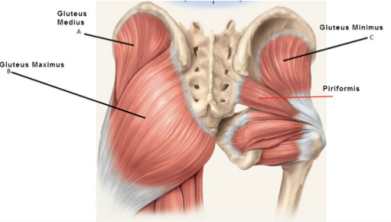
glutes rowing
[corewalking.com]
Restriction: Gluteus medius, gluteus maximus, piriformis

Location: Posterior hip, “the butt muscles”

Rowing fault: Poor compression at the catch, poor leg drive, shortened reach during recovery 

Continue reading → Glute Mobility for Rowers

mobility for rowers hip flexors

Hip Flexor Mobility for Rowers

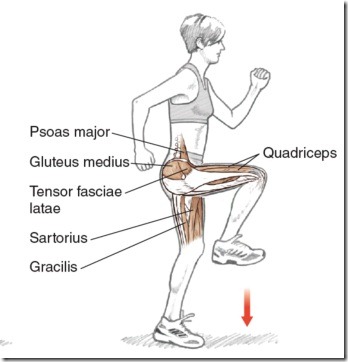
In Part 1, we discussed what “tightness” really is (and what it isn’t), why mobility is so much more than just flexibility alone, and how to address mobility restrictions in the thoracic spine. In Part 2, we discuss the big bad hip flexor muscles. Hip flexors have become a popular one to smash on, and with good reason for rowers, but there’s good reason to understand this muscle group, what it does for you in performance, and the specifics of how you can care for it. Rowers use the hip flexors almost all the time in training, so even if there isn’t a specific injury or condition, this muscle group can really benefit from a little extra care to facilitate recovery and effective training.

hip flexors rowing
[speedendurance.com]
Restriction: Hip flexor

Location: Anterior upper thigh

Test: Test hip flexor tightness using The Thomas Test

Rowing fault: Poor compression at the catch, poor reach during recovery

Continue reading → Hip Flexor Mobility for Rowers

mobility for rowers thoracic spine

Thoracic Spine Mobility for Rowers

With its unique demands as a seated sport and a taxing repetitive motion, rowing requires an informed and specific mobility regimen to maximize performance and minimize risk of injury. In this four-part mobility for rowers series, you’ll learn how to effectively target common problem areas with a combination of self-manual therapy, dynamic stretching, and static stretching for improved performance and longevity in the sport. Ideally, you’ll implement these routines before you experience pain, restriction, or another problem. Each area only takes 10-15 minutes to work through, so these are great to incorporate into your training as a regular part of your recovery plan. Simply taking care of your body with a little extra attention goes a long way toward preventing minor aches and pains through a hard rowing season.

Part 1: The Thoracic Spine
Part 2: The Hip Flexors
Part 3: The Glutes
Part 4: The Ankles

For most athletes, practicing and competing in their sport is a daily break from the usual routine of sitting necessitated by the lifestyle of a student or desk-bound employee, but not so for rowers. While mobility work is important for all athletes, it is especially important for rowers to maximize performance and minimize risk of injury in both the short-term and long-term. Rowing is a difficult repetitive motion requiring great flexibility, stability, and strength. If you lack range-of-motion to even achieve basic positions of the stroke, how can you expect to generate and sustain race-pace force from those positions? 

Continue reading → Thoracic Spine Mobility for Rowers

rowing peak power training cover picture words

Rowing Peak Power Training

Rowing peak power is the main training goal of the pre-season or pre-competitive block of training. This phase of training occurs between the off-season and race prep or the in-season phase of multiple races. We take the base of general strength, muscle mass, and aerobic fitness that the rower developed in the prior off-season training phases and turn it into boat-moving, flywheel-spinning peak power for fast starts, power moves, and sprints.

This article is Part 3 in my annual programming series. Read “The Basics of Strength Training for Rowing” for the general overview of the annual strength training plan, and then individual block-by-block articles for Part 1 Off-Season/General Prep, Part 2 Specific Prep, and Part 4 In-Season/Race Prep.

Table of Contents: 

rowing peak power training cover picture words

Continue reading → Rowing Peak Power Training

youth strength training coach with young athlete teaching the squat exercise

Youth Strength Training

Youth strength training represents one of the greatest windows of opportunity in an athlete’s development. Properly planned and instructed, strength training has the potential to improve young athlete performance in the short and long term, as well as offer an enjoyable way of engaging with physical fitness for life. In this article, we’ll review some research around youth strength training, discuss some common myths and misconceptions, and build a plan for enjoyment of physical activity and long-term athlete development beginning in childhood.

Key Points: Commonly cited problems with youth strength training are typically due to an inappropriately advanced training plan, poor instruction, or lack of supervision by the coach. Young athletes can learn developmentally appropriate physical training fundamentals and build gradually on those skills as their training capacity increases. Coaches of young athletes should focus first on enjoyment of and engagement in physical activity, then on developing general athletic movement fundamentals and building a foundation for future performance improvement.

Table of Contents:

youth strength training coach with young athlete teaching the squat exercise

Continue reading → Youth Strength Training

strength training for rowing

Basics of Strength Training for Rowing

Strength training is important for rowers to increase total force production, rate of force development, gain or maintain muscle mass, and train the muscles and movements that are neglected by the rowing stroke. Good strength training for rowing improves general athletic coordination, rowing performance, and resistance to injury. In this article, we’ll cover the basics of what strength training exercises rowers should do and how to construct a basic strength training program to support rowing training and performance goals.

Table of Contents:

basics of strength training for rowing cover graphic with text demonstrating bodyweight squat, pvc pipe hinge, pushup, and bodyweight row exercises

Continue reading → Basics of Strength Training for Rowing